Das Kind der Seehundfrau
An opera for children based on an old Inuit tale
Das Kind der Seehundfrau, written by Sophie Kassies with music by Robyn Schulkowsky, tells the story of Oruc, a boy growing up between two worlds, and looks back at the unusual circumstances in which his parents met.
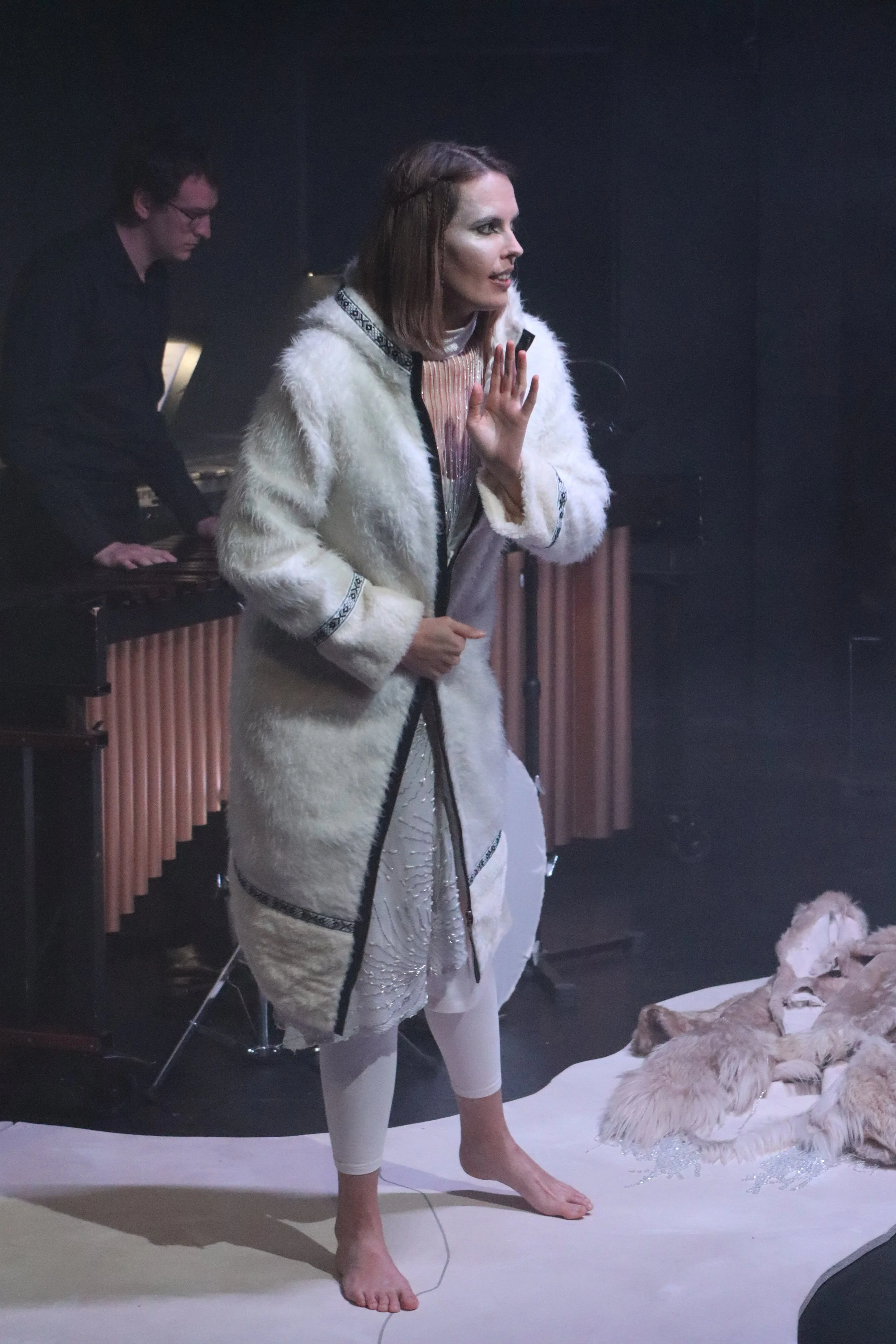
Set in the Arctic, the visual concept creates an imaginative rather than realistic interpretation of its setting. Stage and costumes share an almost entirely white palette, interrupted only by occasional shades of grey, black and pale brown. This reduced colour world evokes the coldness and vastness of the Arctic while creating a common visual ground for the story’s realistic and magical elements.
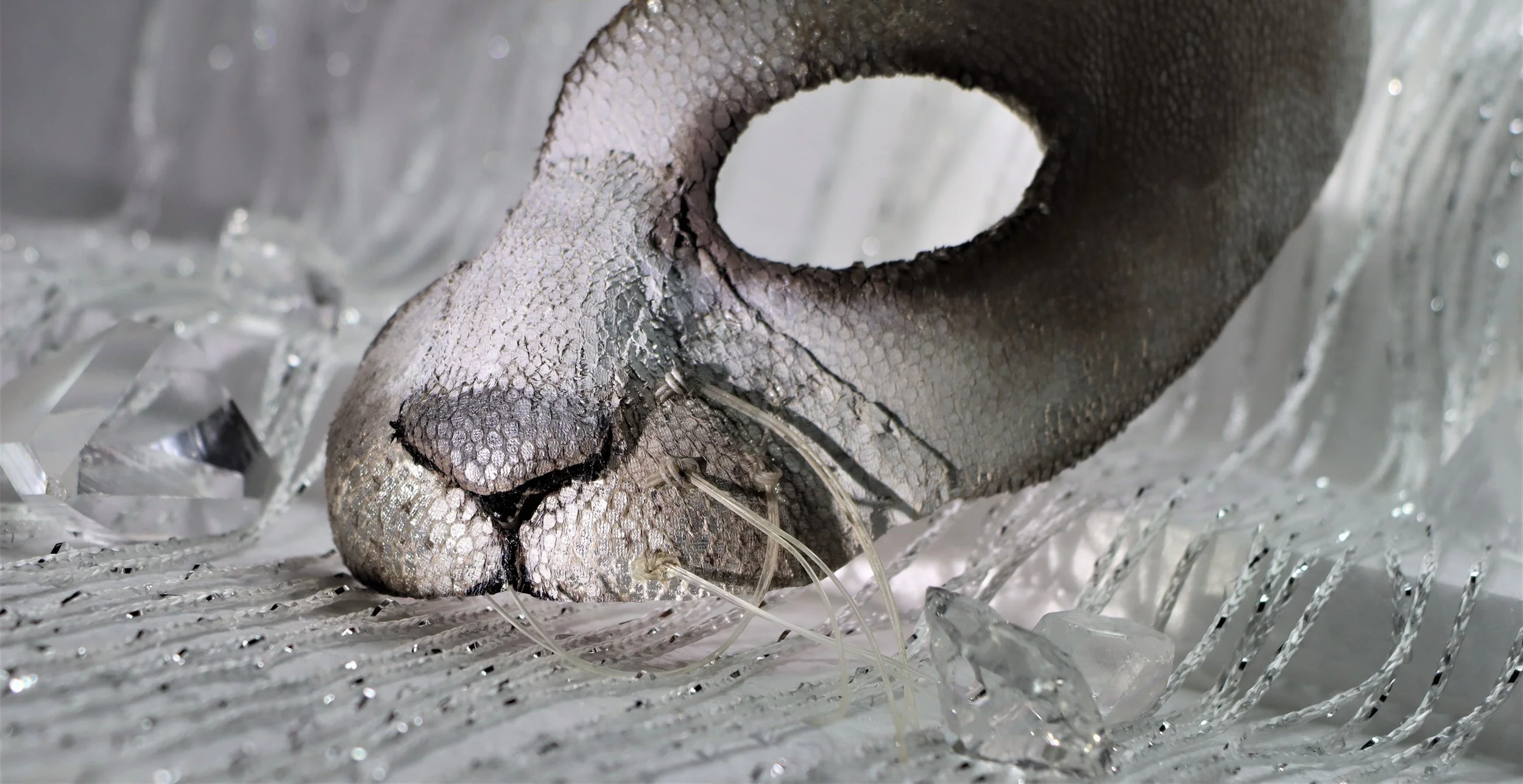
The human characters are approached through familiar, almost storybook-like silhouettes, while the more fantastical figures move beyond this everyday visual language. The shaman’s costume draws on cultural research while introducing more magical elements, whereas the Seal Woman appears in a shimmering, light-reflecting costume. Referenced within the story itself, this glittering quality emphasises her otherworldly nature and becomes a visual reminder of the world that separates mother and son.
Three live musicians are integrated directly into the scenic environment rather than separated from the action. Their presence becomes part of the visual world, bringing music, performers and space together within a shared stage image.
Überzwerg-Theater am Kästerplatz X Saarländisches Staatstheater,
May 2023
Director: Katharina Molitor
Stage and Costume Design: Faveola Kett
Music Director: Nathan Blair
Dramaturg: Benjamin Wäntig
With Carmen Seibel, Nicolas Bertholet and musicians of the Saarländisches Staatstheater
Pictures © Astrid Karger and Faveola Kett
Link to the trailer:
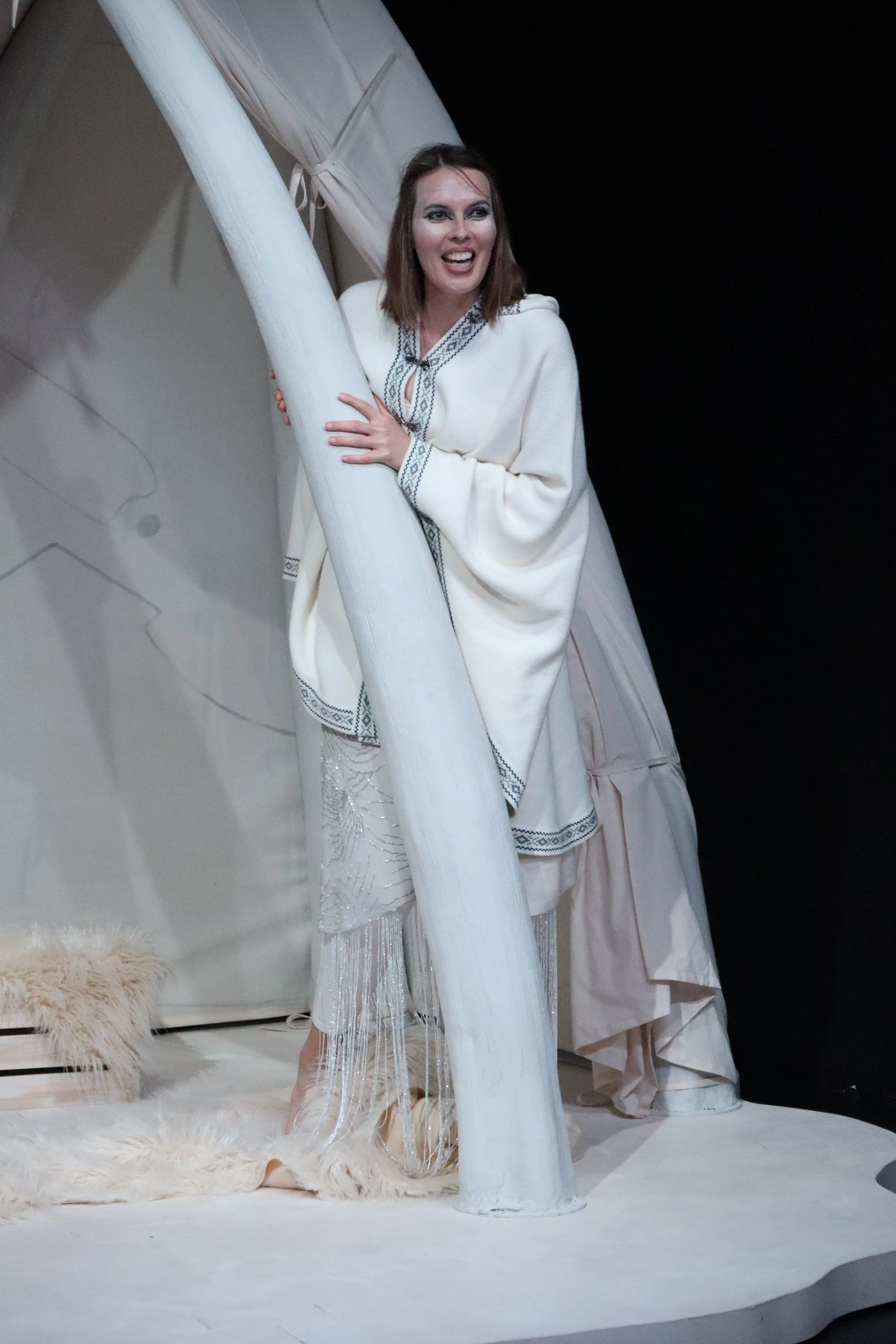


“…Erzählt wird diese Geschichte in eindrucksvoller Kulisse, die die Welt von Oruks Eltern mit viel Raffinesse zusammenbringt. So hat Faveola Kett ein Bühnenbild erschaffen, das mal die große weiße Weite und mal, nach Drehen und Wenden, eine Unterwasserwelt zeigt. So entpuppt sich das große, aus Konchen und Tuch gefertigte, Zelt der Familie von hinten betrachtet als riesiger Schwertwal...”
— Isabell Schirra, Saarbrücker Zeitung


“…Und dann die Kostüme! Durch viel Glitzer und Glimmer wird das märchenhafte dieser Erzählung aufgefangen...”
— Isabell Schirra, Saarbrücker Zeitung 